Arti Singh: Building confidence, stitch by stitch
 Team Reliance Foundation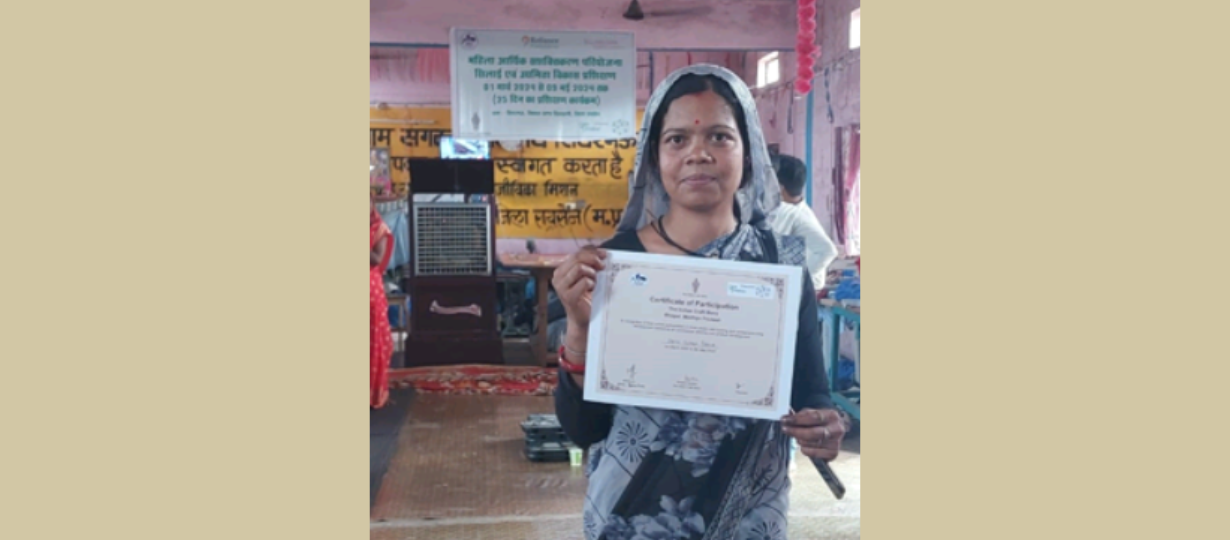
Arti Singh, a 30-year-old single mother from Searmau village in Silwani block, Raisen, Madhya Pradesh, supports her family through non-farm work, as she does not own any agricultural land. With more than ten years of experience in stitching, including factory work in Katni, she runs a small shop and earns around Rs. 2,000 to Rs. 3,000 each month.
In 2018, Arti joined a stitching centre set up by State Rural Livelihoods Mission (SRLM), where she mainly worked on school uniforms. However, the work was limited to about three months a year, earning her only Rs. 10,000 to Rs. 12,000. Although skilled, she lacked the confidence to try new designs or create products suitable for the market.
Under the Swayamshree project, stitching was identified as a key livelihood opportunity for women like Arti. Following a baseline survey, she was selected as one of 30 women for a three-week intensive training in March 2024. The training was conducted by Reliance Foundation and PRADAN, in partnership with SRLM.
Through the training, Arti improved her stitching skills and learned how to standardise products, carry out quality checks, and maintain her machines. She was also introduced to the business side of stitching, including how to find markets for her products.
After the training, Arti began making a wider range of items such as women's shirts, curtains, and cushion covers—many of which she had never made before. She gained confidence, especially after learning accurate measurement techniques, replacing her earlier methods.
Today, she rarely turns down orders and works independently on different products. Arti also takes part in organising market orders, following up weekly at the centre. She has started receiving bulk orders from outside her village, showing growing demand for her work.
With these improvements, Arti's income is expected to increase by Rs. 20,000 to Rs. 30,000 each year. She now hopes to grow her stitching work into a full business, creating a more secure future for her family.