India Day @ UNGA 2026: From India to the World
- 24 September, 2026
- New York
- 10:30 AM
- 8 min read
Scaling Development Innovations for Global Impact
Co-organised by Reliance Foundation, United Nations in India, and Observer Research Foundation (ORF), India Day @ UNGA is an annual convening held at the sidelines of the United Nations General Assembly High-Level Week. Now in its fifth year, the event has established itself as a leading platform for dialogue on inclusive development, technology, and global partnerships — bringing together multilateral institutions, government bodies, civil society, and the private sector to explore learnings from India's development journey.
The 2026 edition — From India to the World: Scaling Development Innovations for Global Impact — marks both a milestone anniversary and a critical juncture. As the international community enters the final stretch toward the 2030 SDG deadline, the question is no longer whether India's development innovations work, but how they can be adapted, scaled, and shared across the Global South and beyond.
This year's programme comprises four thematic panel sessions, keynote and special addresses, a special publication launch, an in-conversation session, a speed talk, and spotlight addresses spanning artificial intelligence, digital public infrastructure, women-led development, health, climate, and renewable energy.
Session 1 | Beyond 2030: Rewiring Development for an Age of Intelligence, Inclusion and Instability
The foundations of global development are shifting. Geopolitical fragmentation, technological disruption, climate volatility, demographic shifts, and widening inequalities are collectively rewriting the conditions under which progress is made. Digital technologies, artificial intelligence (AI), digital public infrastructure (DPI), women-led development, and new forms of South-South cooperation are reshaping how countries build prosperity, resilience, and competitiveness — with rural economies emerging as central to this transition. This session examines which assumptions behind today's development architecture no longer hold, and what must be fundamentally redesigned rather than simply improved.
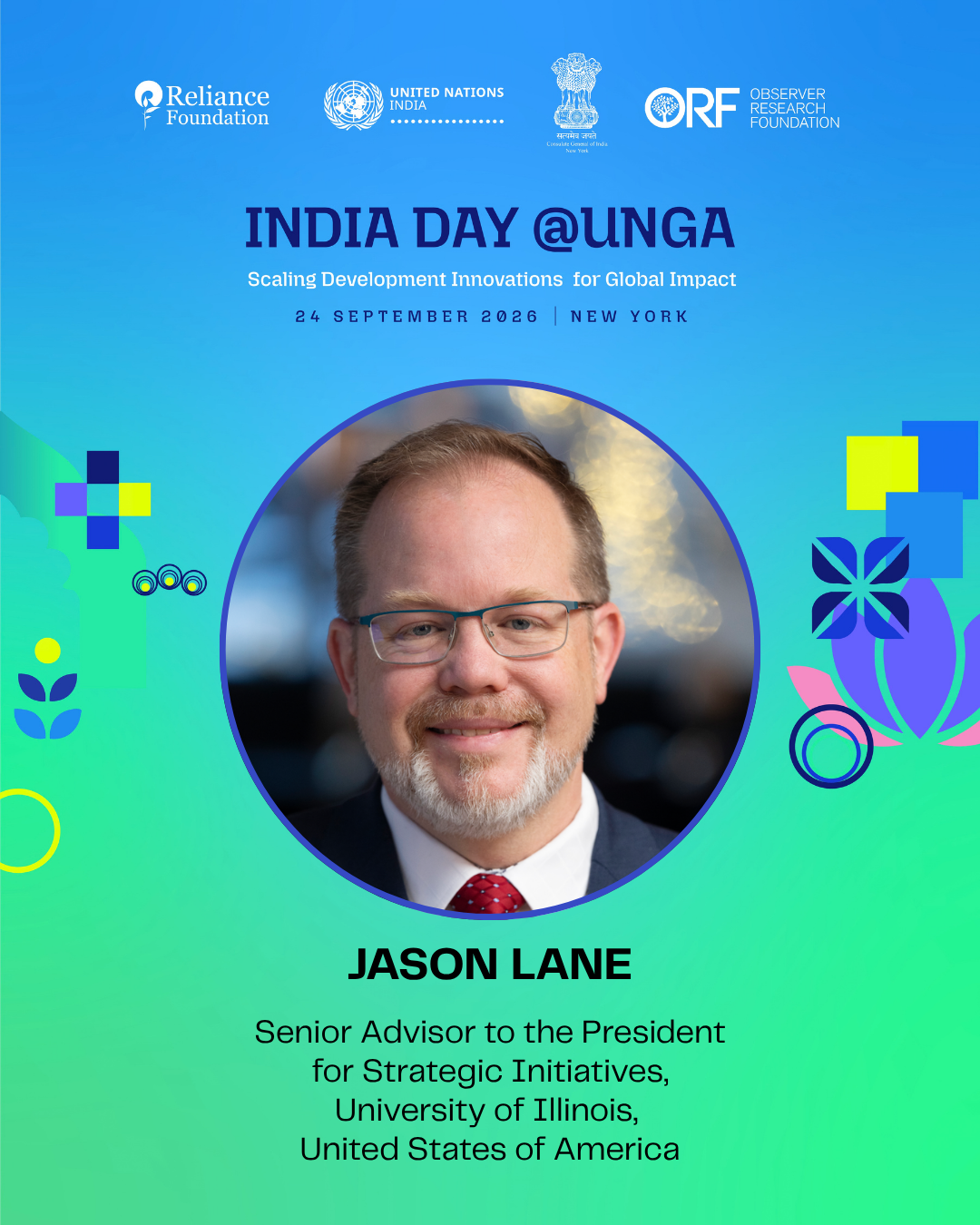
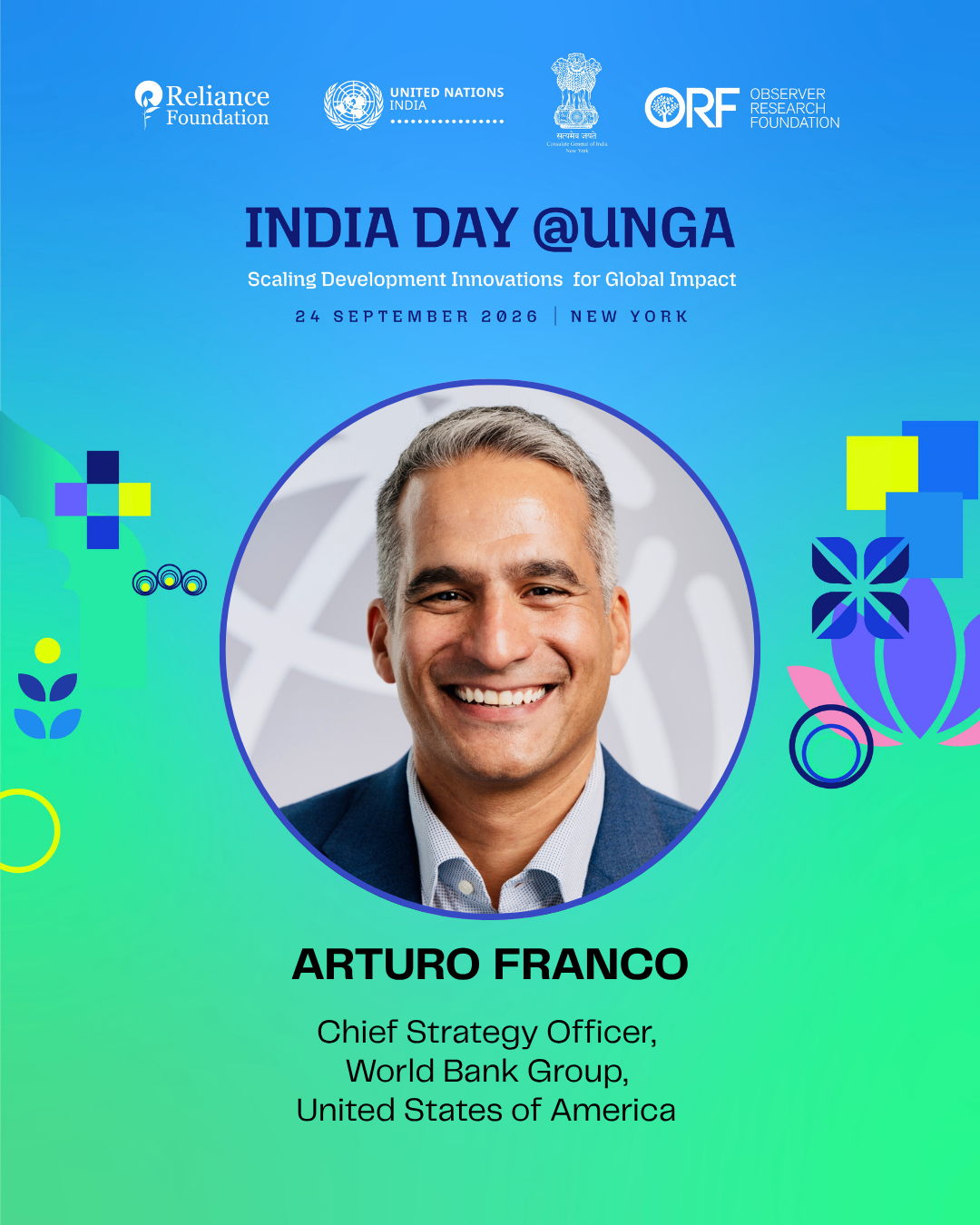
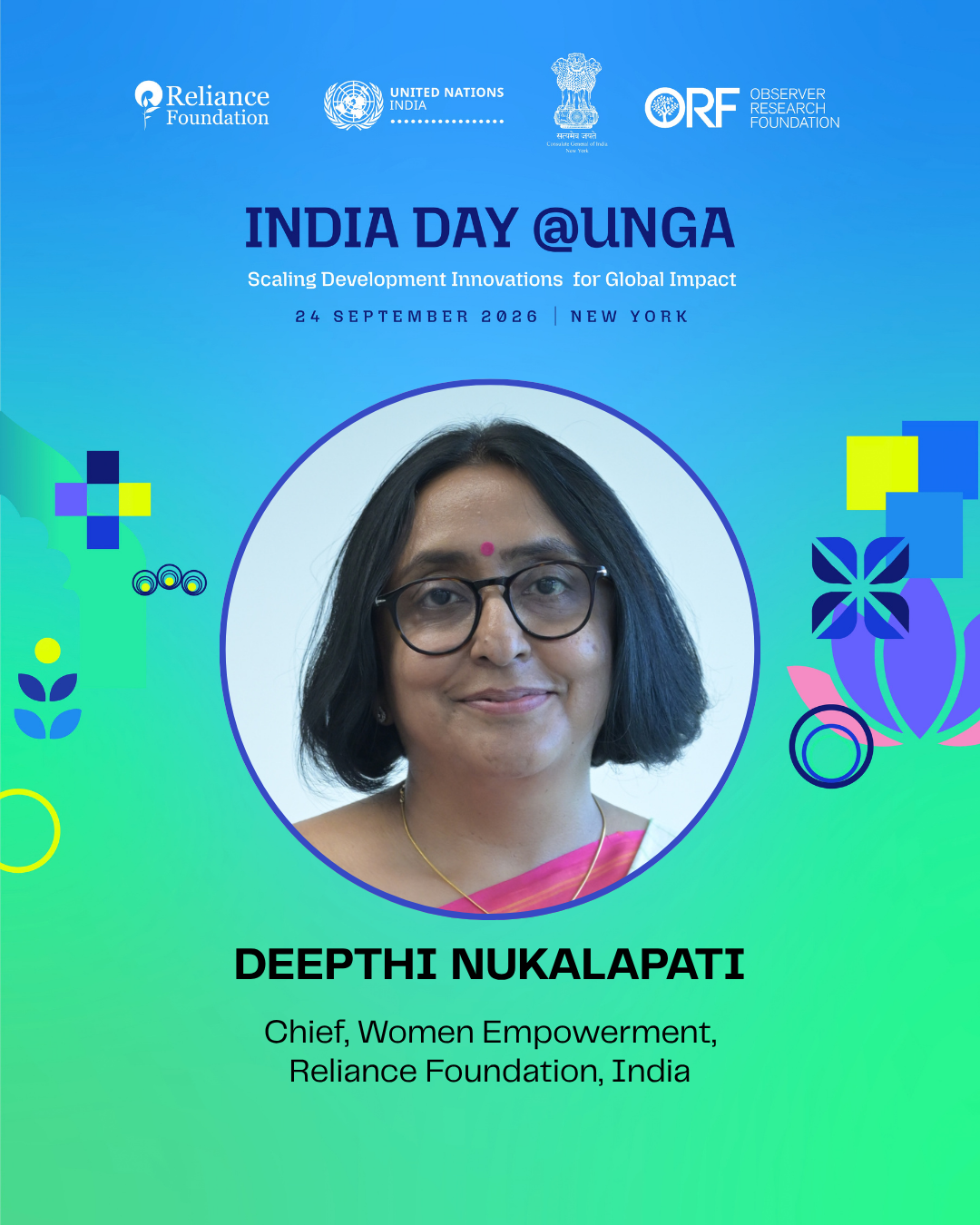
Panellists include: Jason Lane (University of Illinois), Rohit Kansal (Department of Rural Development, India), Caroline Berson (PepsiCo), Arturo Franco (World Bank Group), Deepthi Nukalapati (Reliance Foundation)
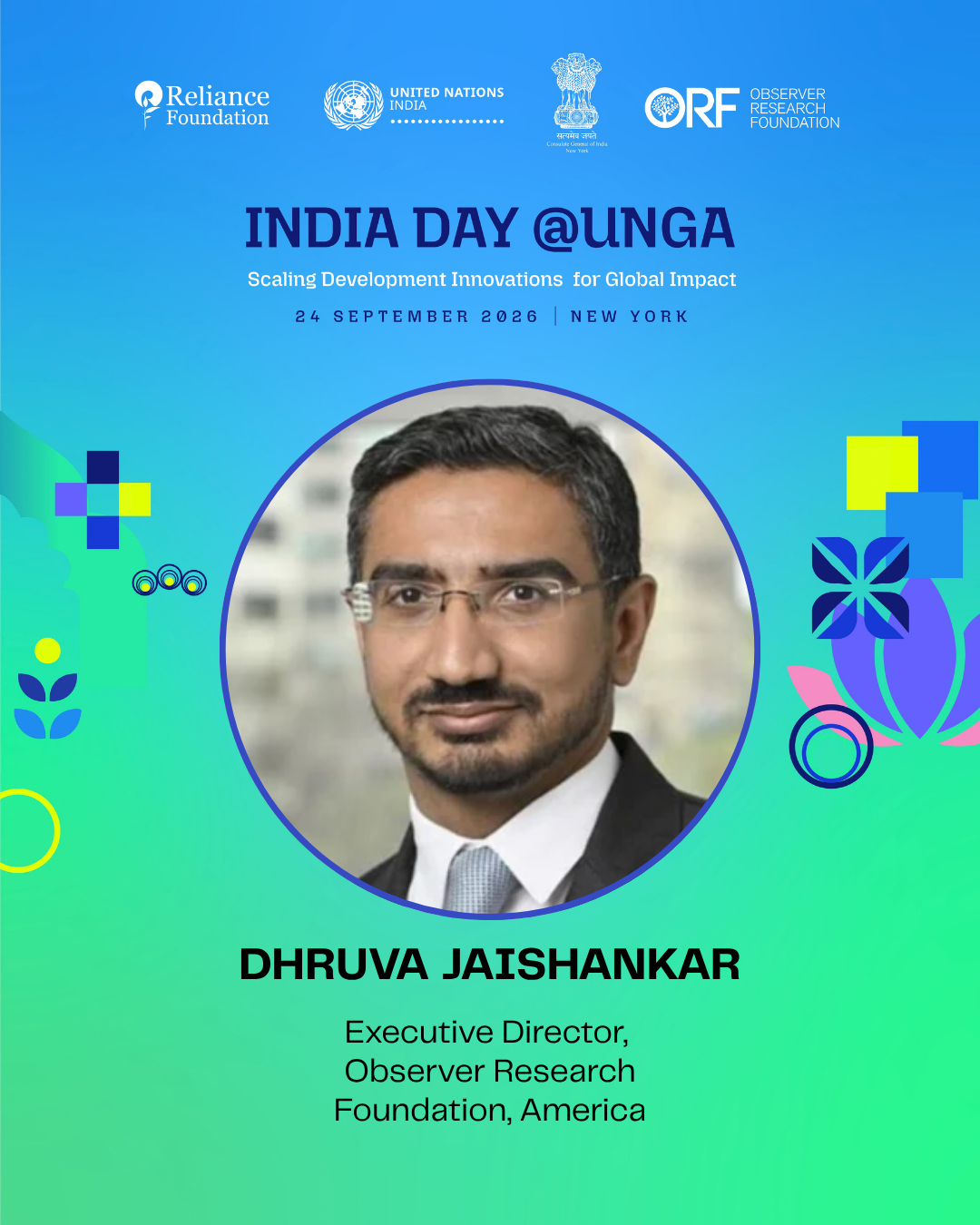
Moderator: Dhruva Jaishankar, Executive Director, ORF America
In Conversation | Renewable Energy and Development
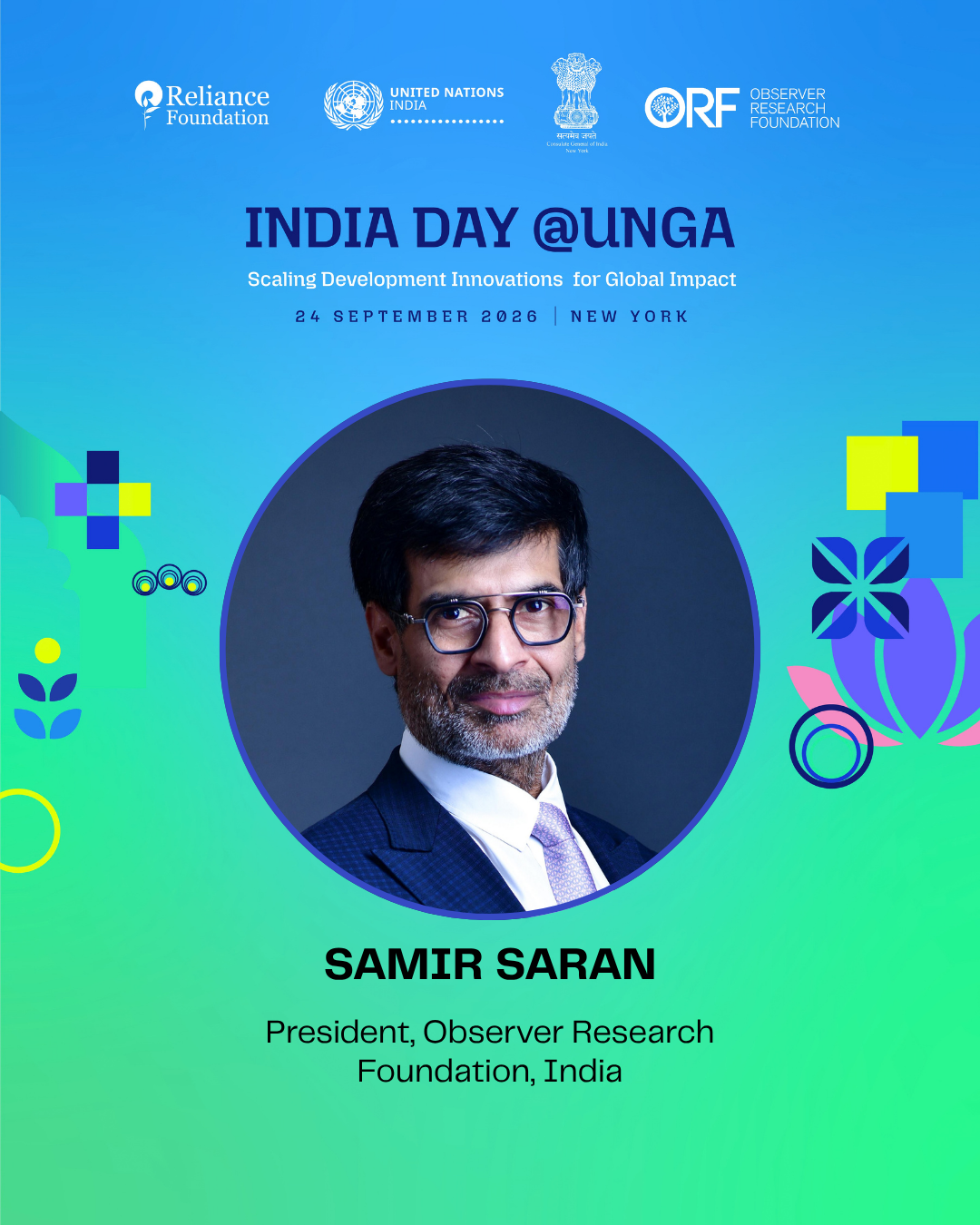
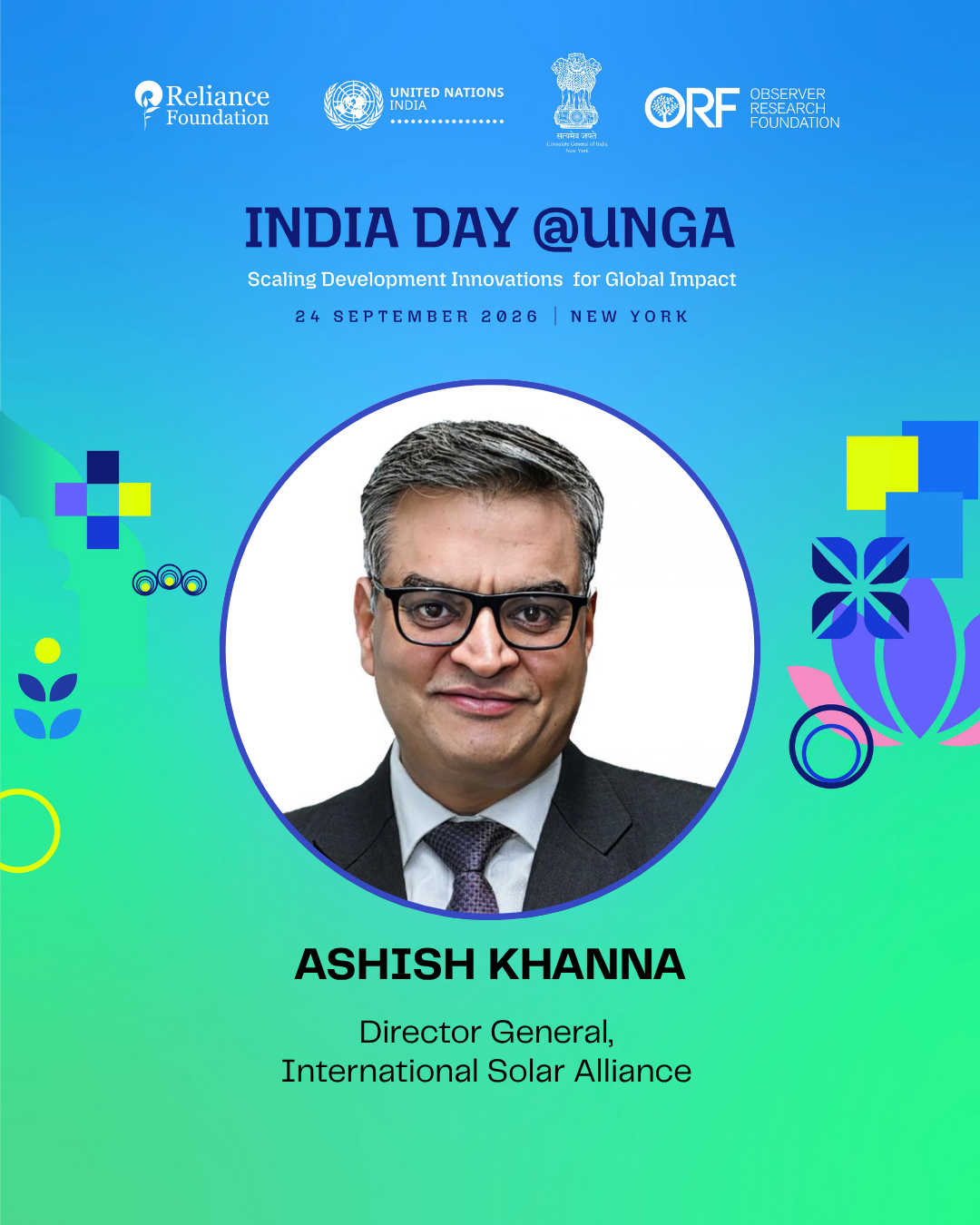
Ashish Khanna, Director General, International Solar Alliance, and Santosh Kumar Sarangi, Secretary, Ministry of New and Renewable Energy, India, in conversation with Samir Saran, President, ORF, India.
Session 2 | Women, Children and Youth: Building Healthier Futures for the Next Billion
The next billion people to access quality healthcare, education, nutrition, financial services, and economic opportunity will largely come from the developing world. India's experience — combining strong public systems, community-led delivery, and technological innovation — demonstrates that lasting progress requires action across these dimensions simultaneously. Digital health, AI, DPI, and data-driven service delivery are expanding access to care, while frontline health workers, educators, and local institutions remain essential to improving health and human development outcomes. This session explores how governments, industry, philanthropy, and communities can work together to build healthier futures for the next billion people, drawing on India's leadership in pharmaceuticals, vaccine manufacturing, digital health, and health innovation.
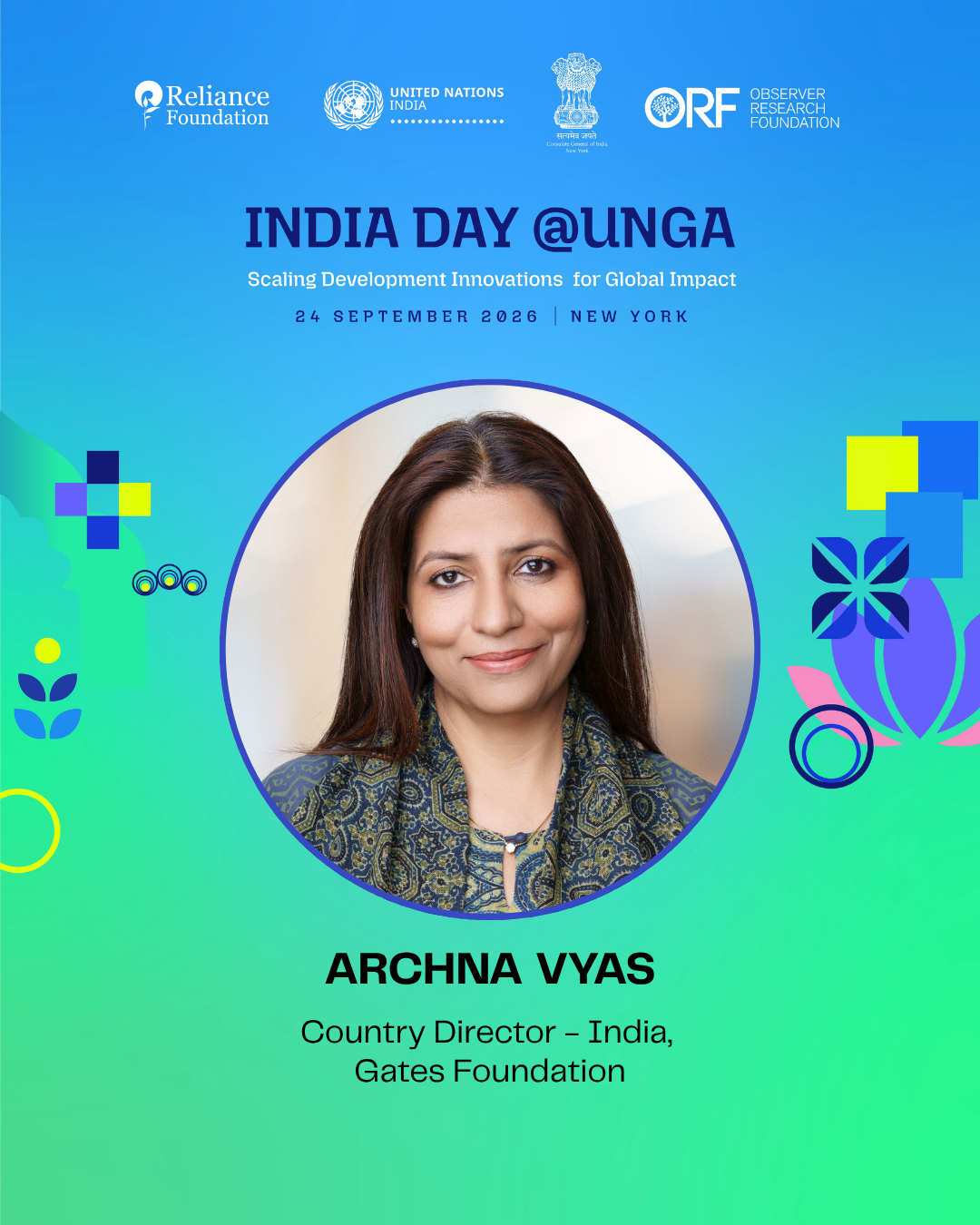
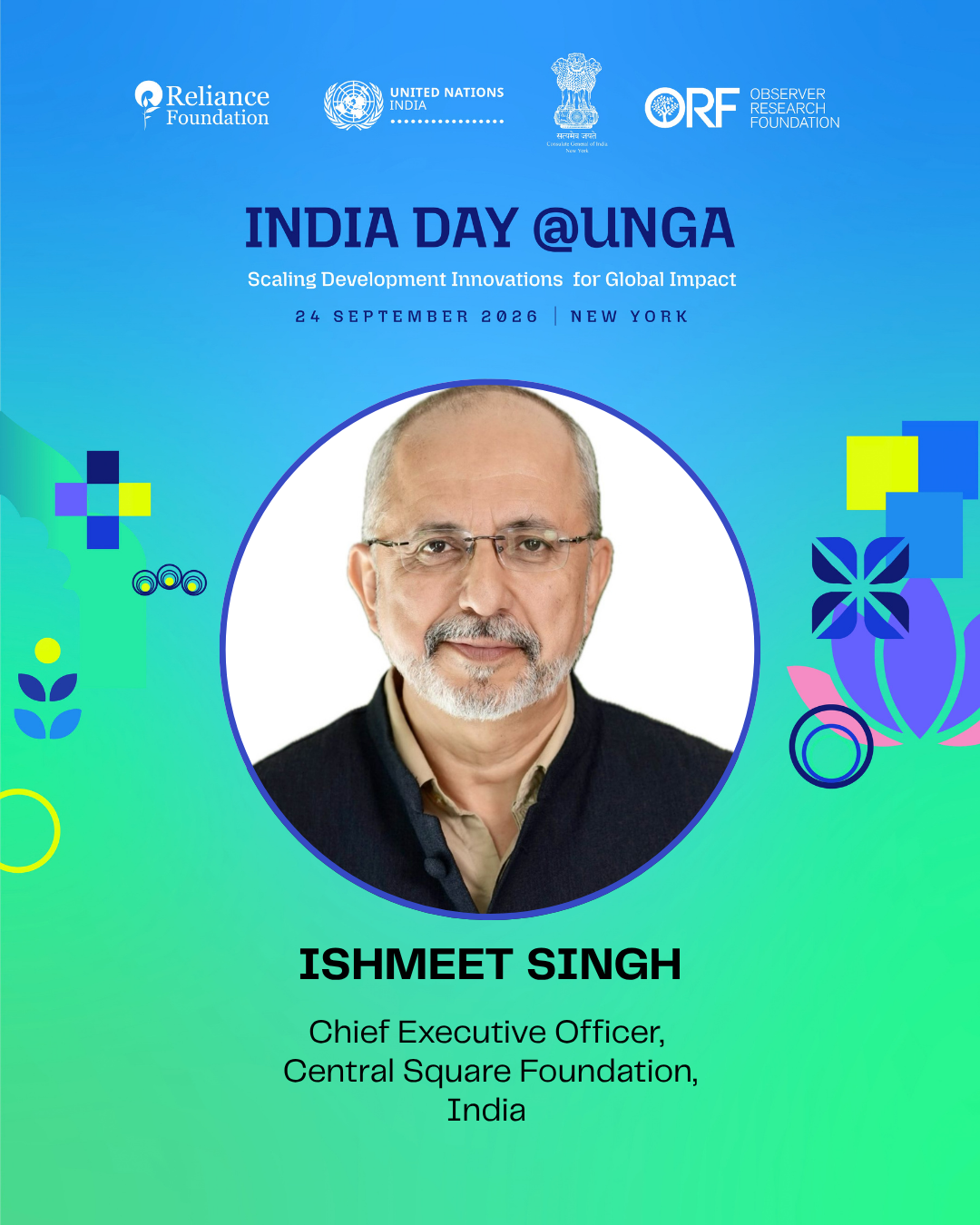
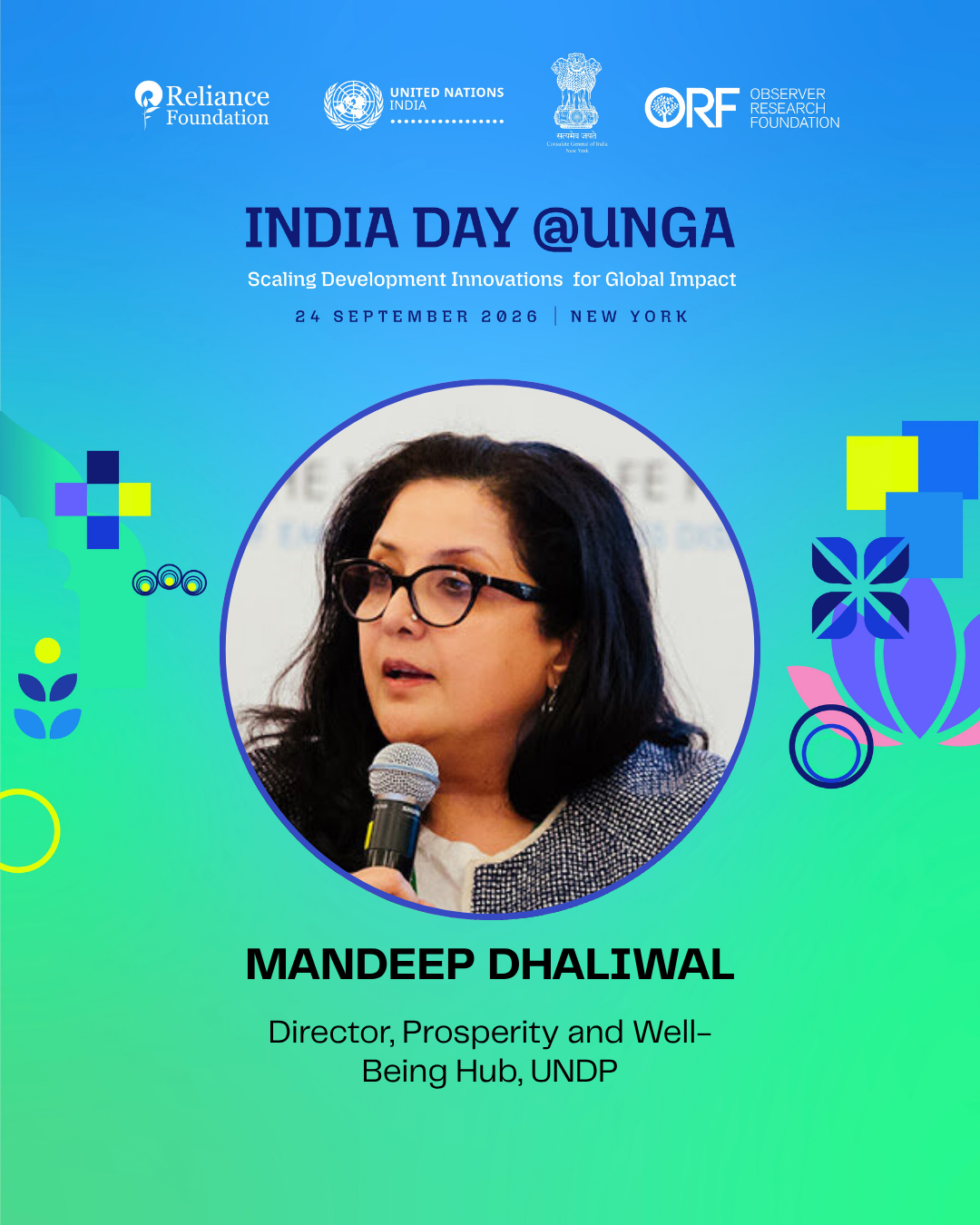
Panellists include: Carla Haddad Mardini (UNICEF), Archna Vyas (Gates Foundation), Ishmeet Singh (Central Square Foundation), Amit Thatte (SII), Mandeep Dhaliwal (UNDP)
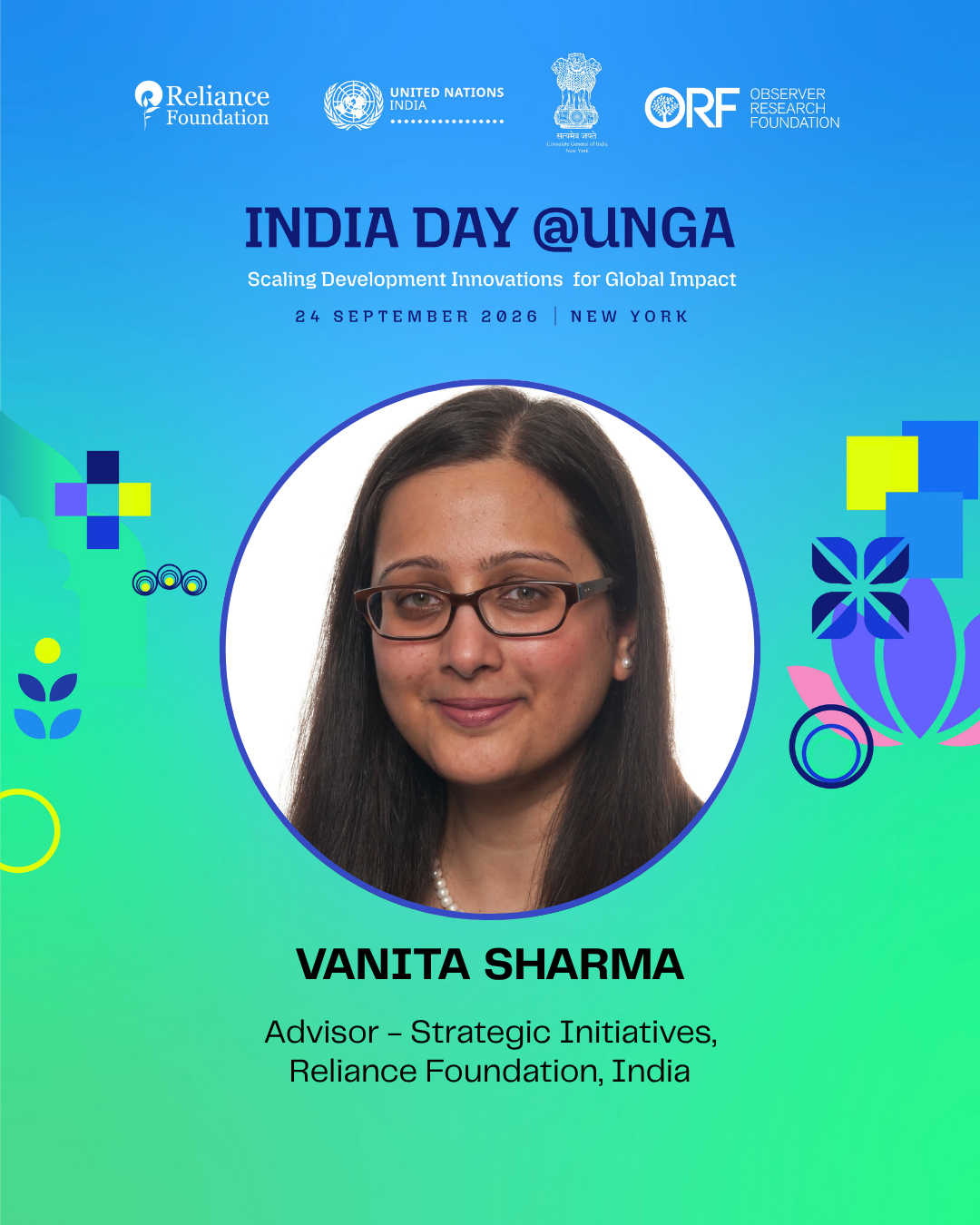
Moderator: Vanita Sharma, Advisor – Strategic Initiatives, Reliance Foundation
Session 3 | The AI Promise: Diffusion at Population Scale
Global AI conversations are increasingly confined to a narrow race for bigger models, more compute, advanced chips, and the promise of Artificial General Intelligence (AGI). For India and other emerging economies, the challenge is different: not merely to extend technological frontiers, but to make AI work across languages, sectors, institutions, and public service delivery. For much of the Global South, the real test of AI will be whether it can solve real problems at population scale, frugally, responsibly, and in context. This session examines how India is approaching AI differently, what public-purpose AI could mean for the Global South, and what institutional, data, talent, and governance capacities are required to move AI use cases from pilots to population-scale deployment.
Keynote Address: Amandeep Singh Gill, Under Secretary General and Special Envoy for Digital and Emerging Technologies, United Nations
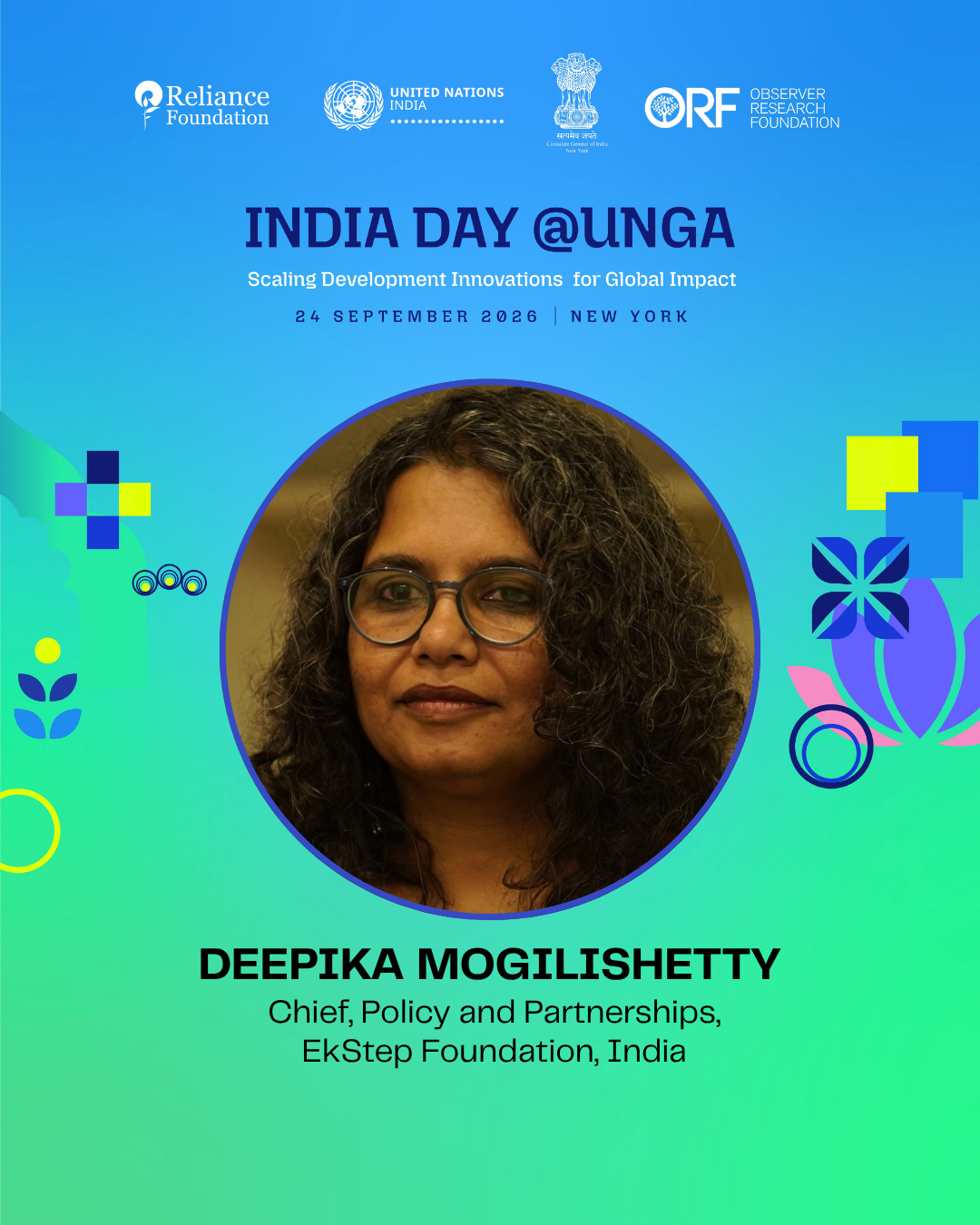
Spotlight Address: Deepika Mogilishetty, Chief – Policy and Partnerships, EkStep Foundation, India
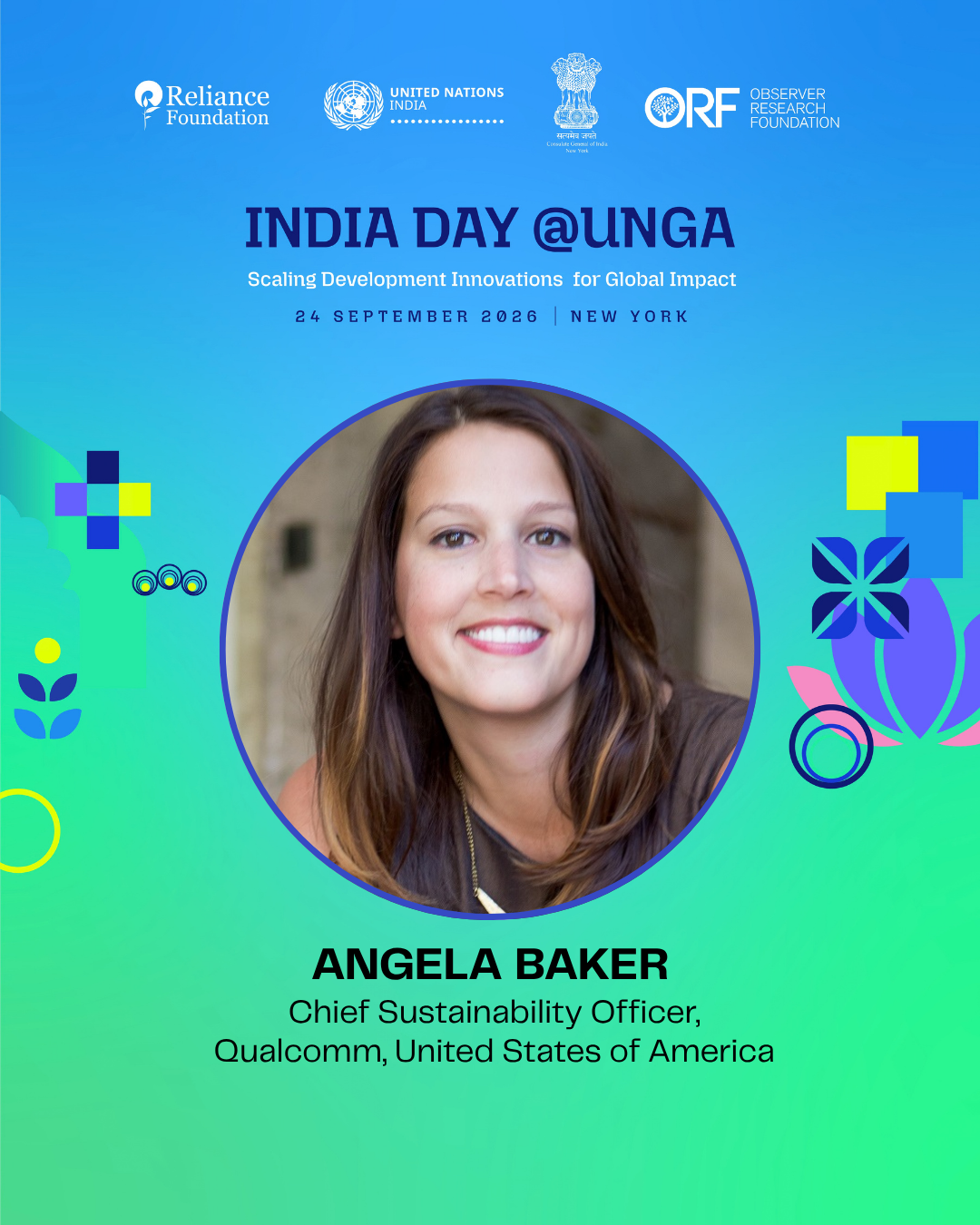
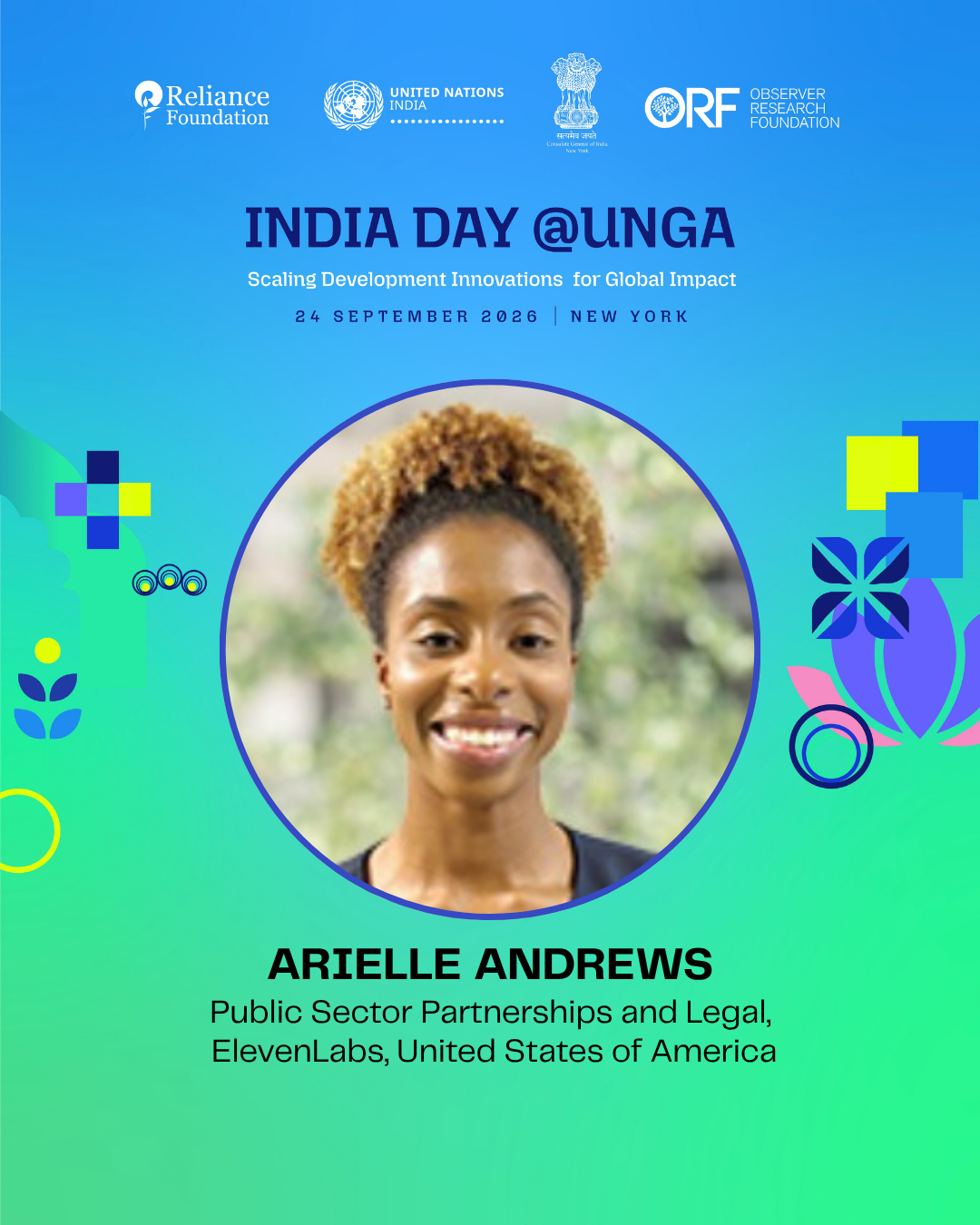
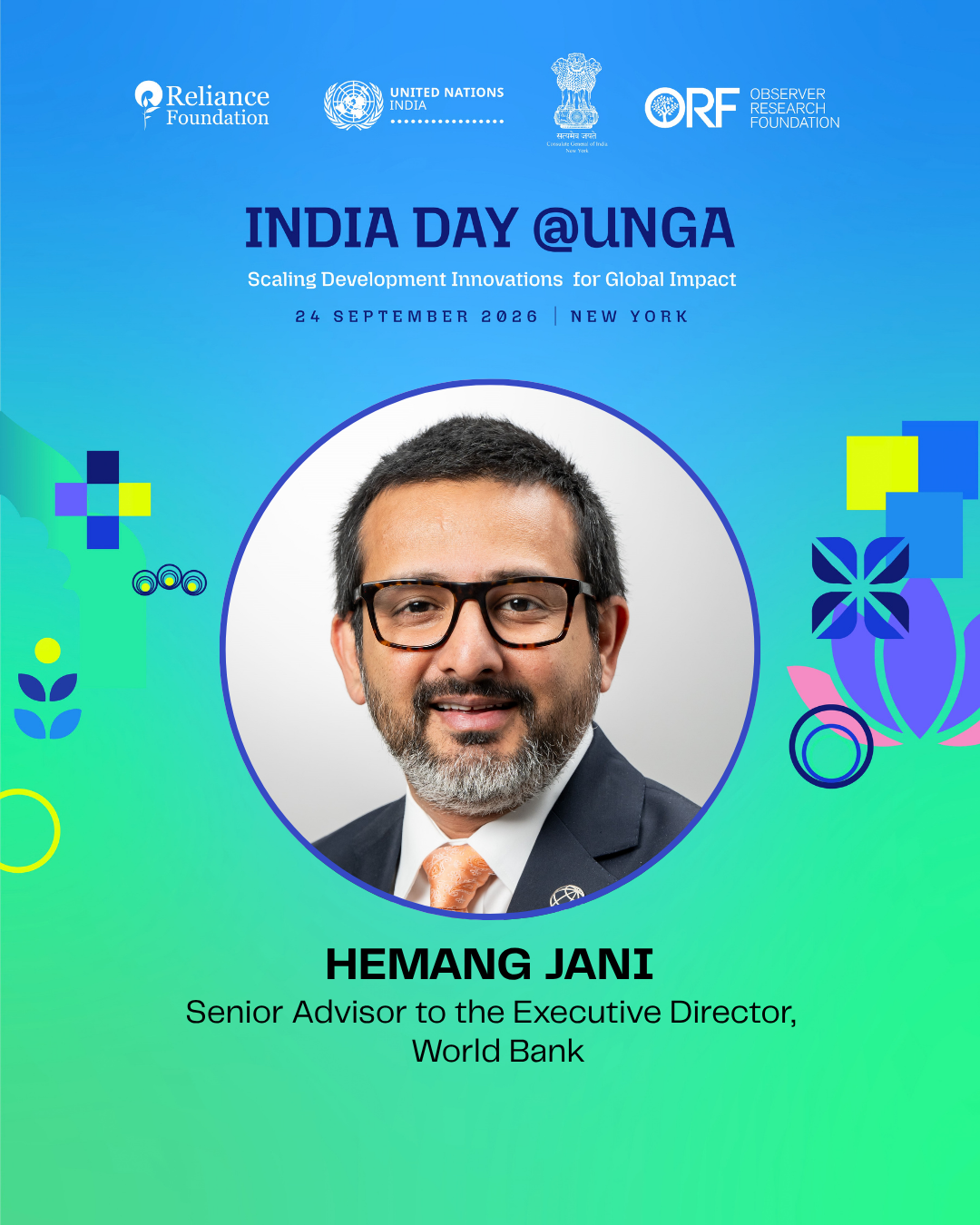
Panellists include: Angela Baker (Qualcomm), Arielle Andrews (ElevenLabs), Isabel De Sola Criado (Office for Digital and Emerging Technologies, UN), Hemang Jani (World Bank)
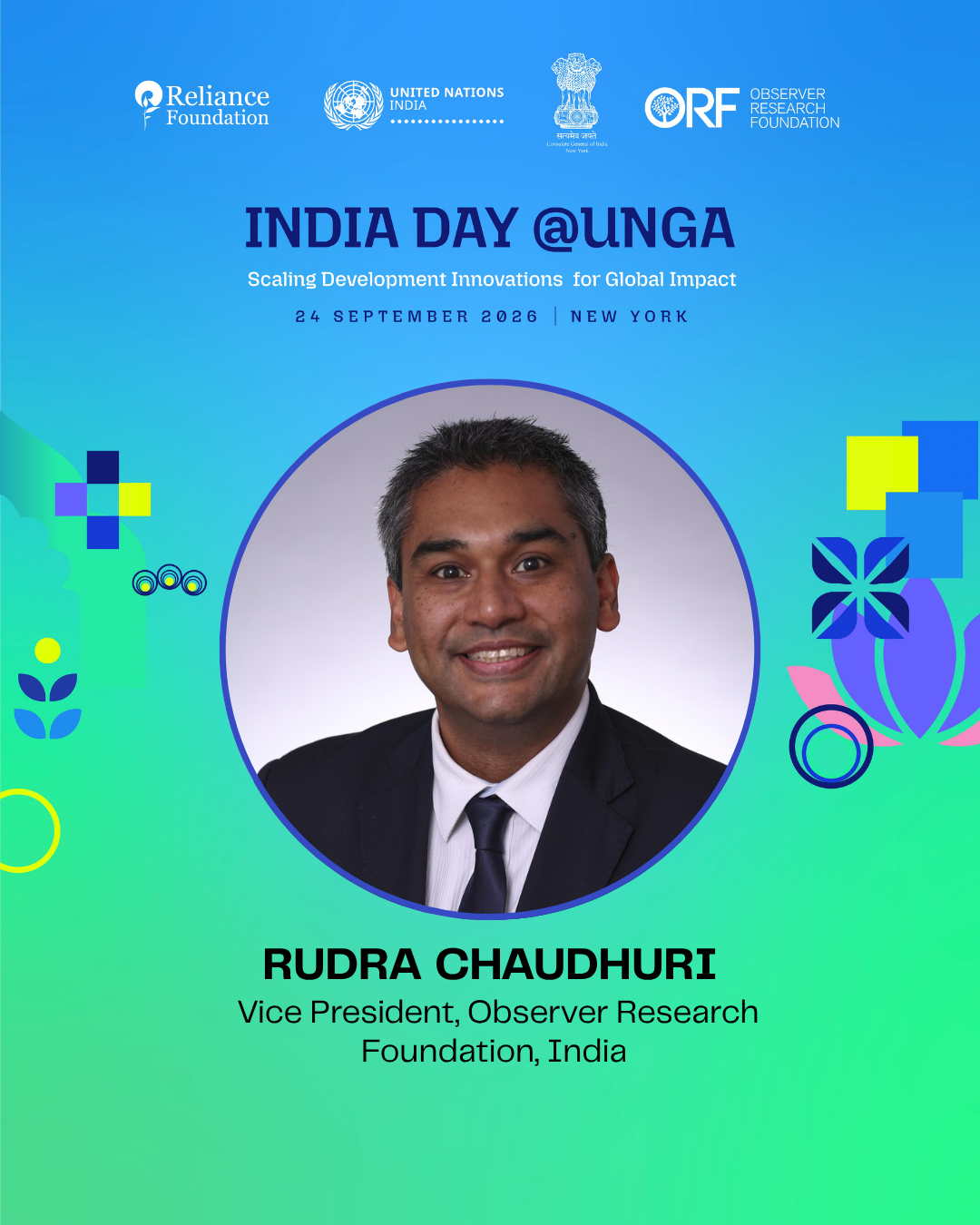
Moderator: Rudra Chaudhuri, Vice President, ORF
Session 4 | Rules of Engagement: AI Governance for a Changing World
AI governance is no longer a theoretical debate about future technologies. As AI capabilities accelerate, governments are being forced to answer harder questions: what must be regulated, who should regulate it, how data is managed and made AI-ready, and when the state has the authority to intervene. From the Global Digital Compact and the UN Global Dialogue on AI Governance to the EU AI Act, AI Safety Institutes, and emerging national frameworks, the central challenge is to build architectures that can keep pace with exponential technological change without freezing innovation. This session convenes policymakers, technologists, and other stakeholders to examine the governance frameworks needed for the AI era.
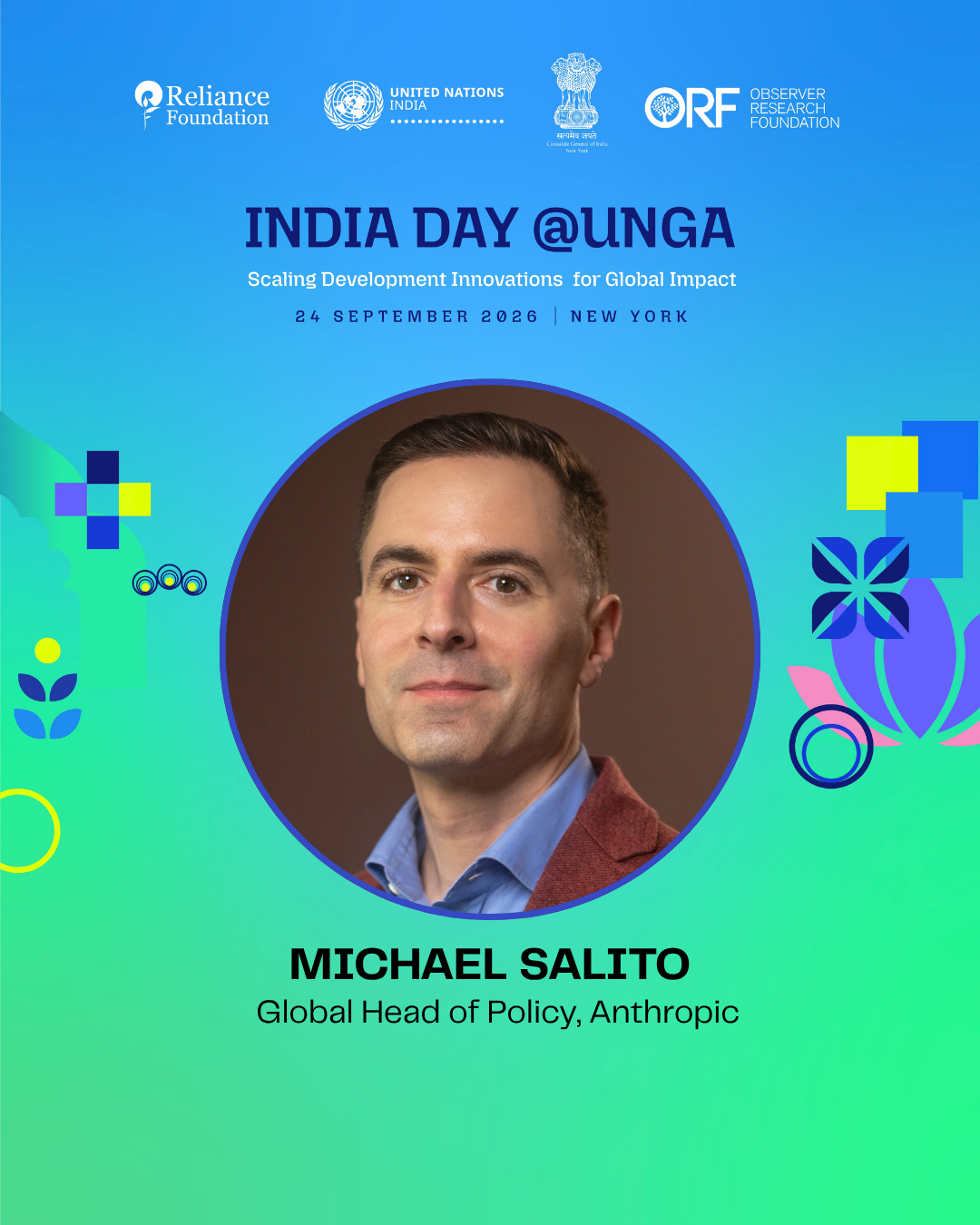
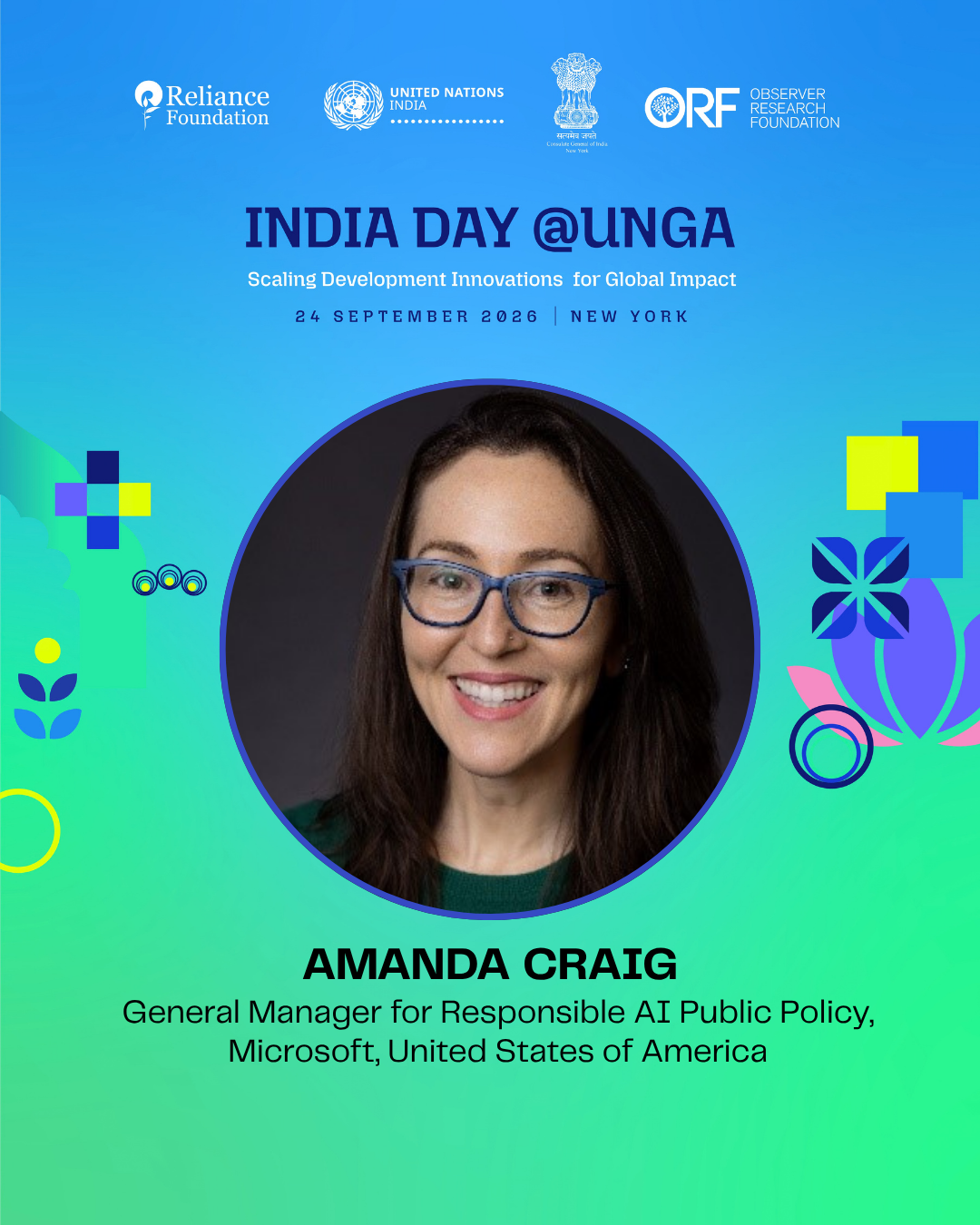
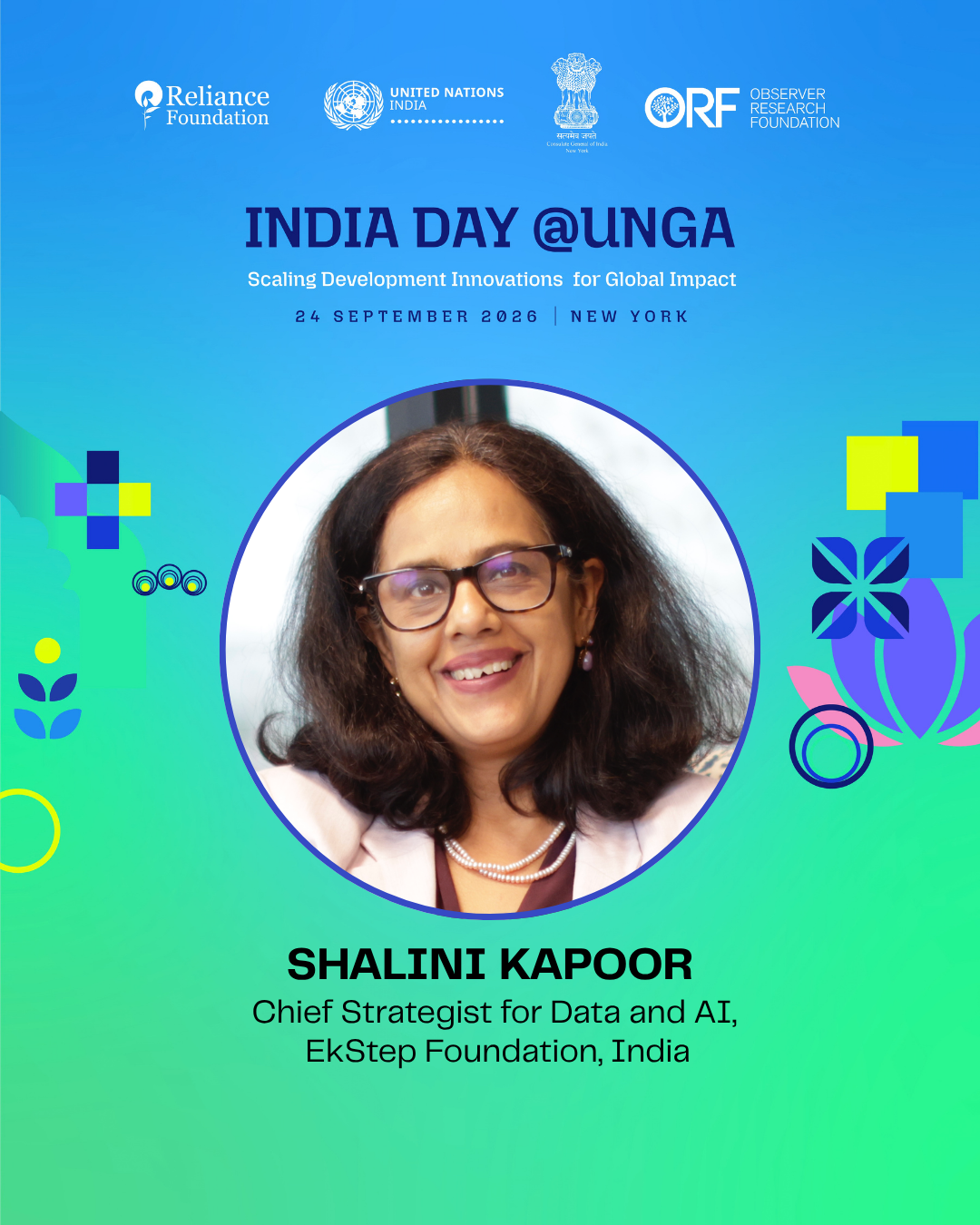
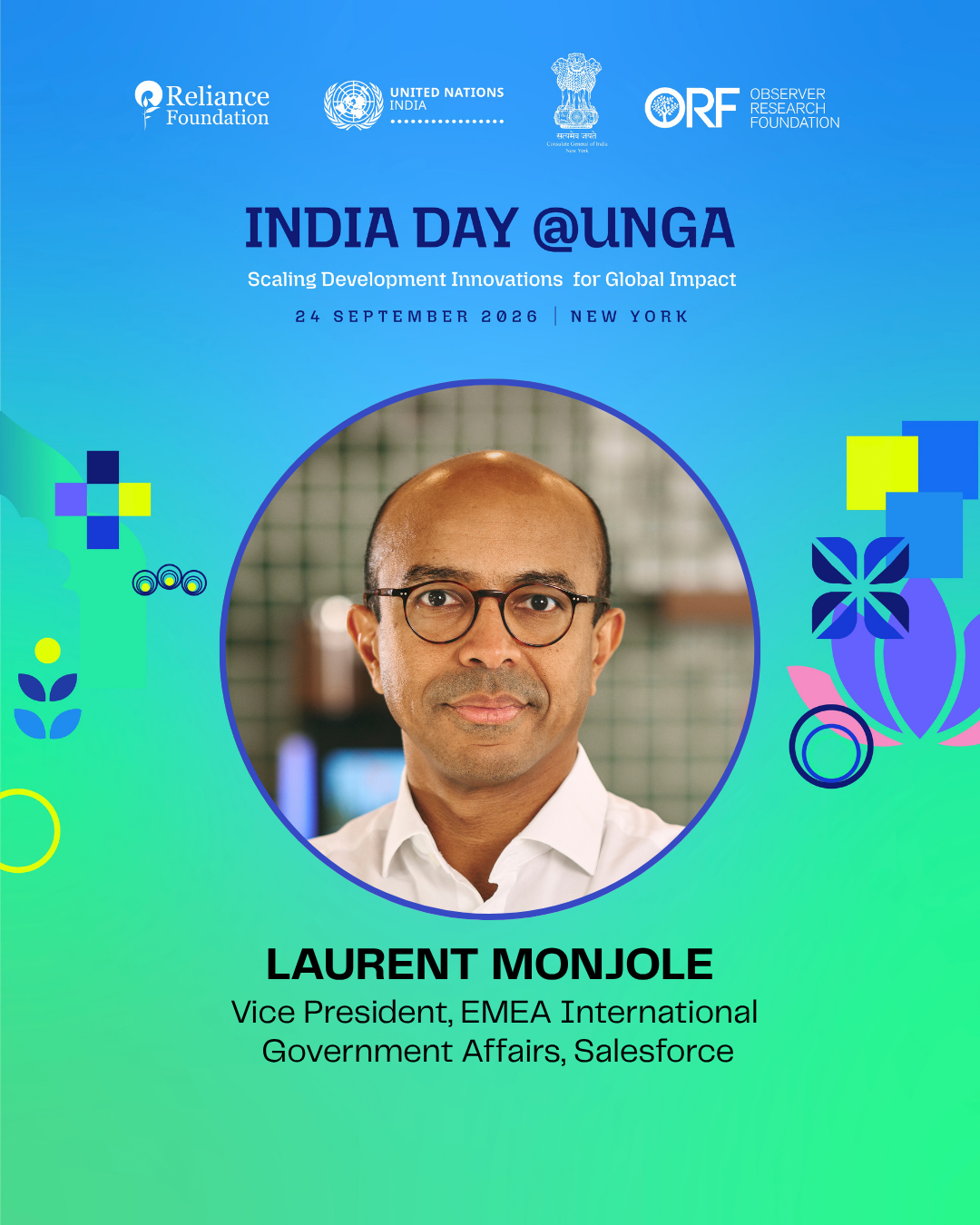
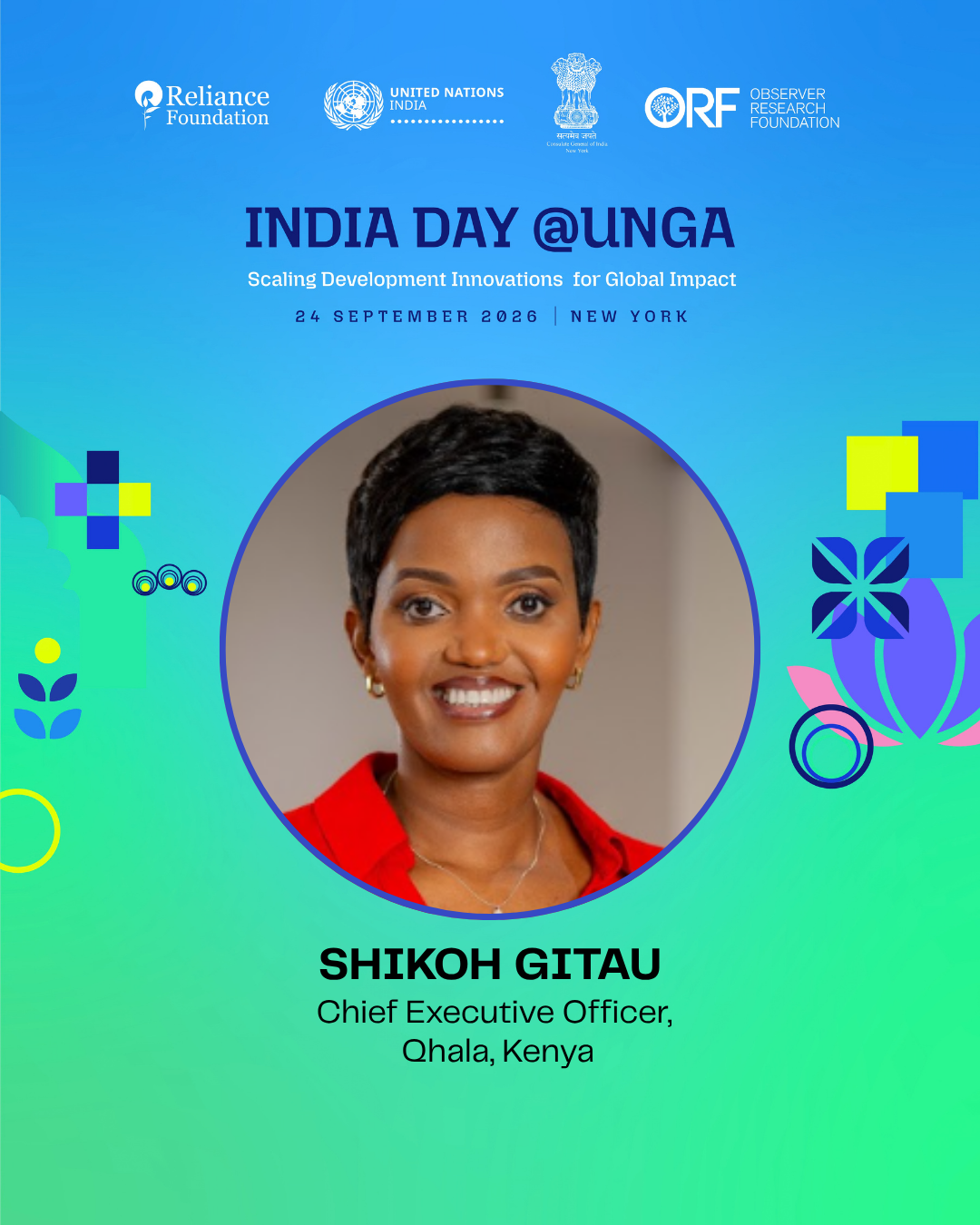
Panellists include: Amanda Craig (Microsoft), Shalini Kapoor (EkStep Foundation), Laurent Monjole (Salesforce), Jennifer Louie (UNDP), Shikoh Gitau (Qhala), Michael Sellitto (Anthropic)
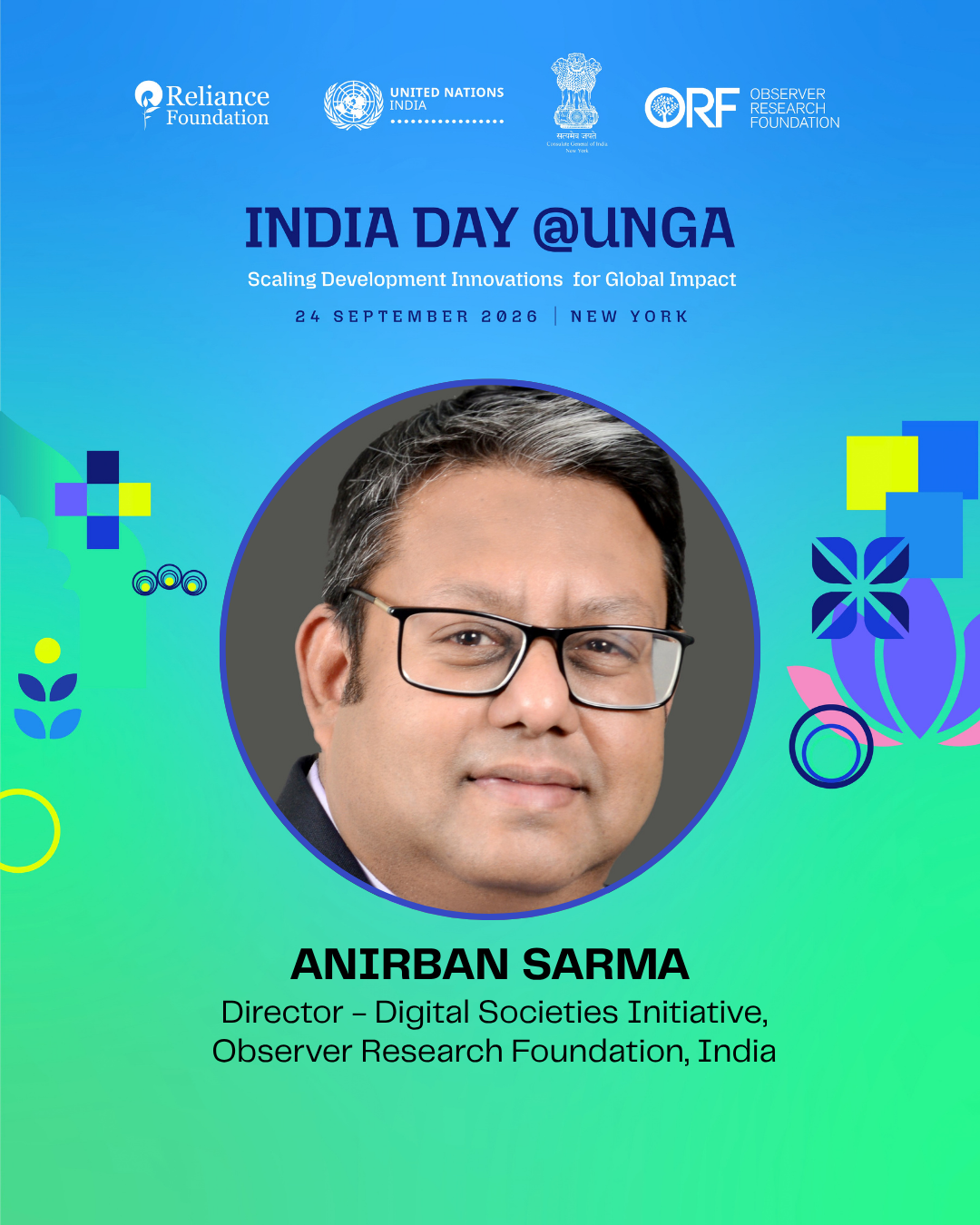
Moderator: Anirban Sarma, Director – Digital Societies Initiative, ORF