Swayamshree Insights: Best Practices in Women Enterprises and Collectives in Odisha
- 3 min read
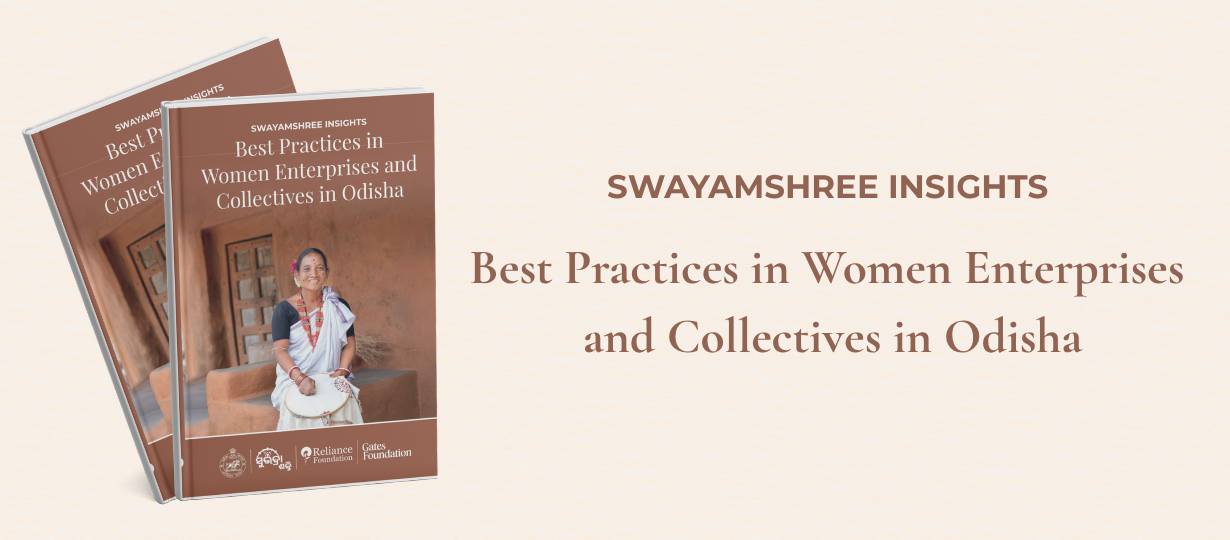
The compendium Best Practices in Women Enterprises and Collectives in Odisha presents a rich documentation of women-led enterprise models emerging from rural Odisha under the Swayamshree programme, a joint initiative of Reliance Foundation and the Gates Foundation. Launched in 2023, the programme aims to strengthen women’s entrepreneurship and livelihoods across Gujarat, Madhya Pradesh, and Odisha by building sustainable enterprises and enabling higher household incomes for rural women.
This publication captures eight best practice case studies from six districts of Odisha, covering farm, allied, off-farm, and non-farm livelihood sectors. The cases reflect how women’s collectives, producer groups, and grassroots institutions are driving livelihood transformation through enterprise development, market linkages, technology adoption, and institutional convergence. From horticulture clusters and mushroom cultivation to Sambalpuri handloom value chains, goatery enterprises, women-led market platforms, and grassroots entrepreneurship mentors, the publication highlights diverse pathways of women’s economic empowerment and agency.
A key strength of this compendium is its ecosystem-oriented perspective. Rather than focusing only on individual success stories, the publication analyses how Mission Shakti institutions, community cadres, Self-Help Groups, and rural livelihood systems collectively create enabling environments for enterprise growth. The publication is grounded in primary field research, with a strong focus on qualitative methods and community-level insights. It also applies a rigorous analytical framework combining value chain analysis, women’s economic empowerment, and livelihoods systems perspectives, making the insights relevant for practitioners, researchers, and development organisations.
The publication contributes valuable field-based knowledge on scalable and replicable enterprise models for women in rural India. It offers practical lessons on strengthening local institutions, promoting inclusive value chains, and building resilient livelihood ecosystems that can inform broader development interventions, policy practice, and investments in women-led rural entrepreneurship.